Why Does Choosing the Right Offset Printing Ink Supplier Matter?
Choosing the right offset printing ink supplier determines how consistently your presses run and how easily you meet buyer specifications. A supplier mismatch can create problems such as inconsistent color, unsuitable drying behavior, or compliance issues that only become visible during production or pre-shipment checks.
Demand for printing ink keeps expanding alongside packaging and commercial print volumes. According to The Business Research Company’s Printing Inks Global Market Report 2026, the global printing inks market grew from USD 38.15 billion in 2025 to USD 39.53 billion in 2026, and is projected to reach USD 47.09 billion by 2030 at a 4.5% CAGR.
Because many offset ink suppliers claim similar quality, buyers need a structured way to compare them. Drawing on real product examples from suppliers such as Hypertai, these seven factors help procurement teams evaluate offset printing ink suppliers, UV ink suppliers, or flexo ink suppliers on their shortlist:
- Factor 1: Product range
- Factor 2: Formulation compatibility
- Factor 3: Substrate and press matching
- Factor 4: Sample coordination and communication
- Factor 5: Compliance with regulations
- Factor 6: Portfolio depth for consolidated sourcing
- Factor 7: After-sales technical support
Factor 1: Is the Product Range Broad Enough for Your Applications?
A supplier’s product range should cover the printing methods and applications relevant to your current purchasing needs. Rather than counting the number of products in a catalog, buyers should check whether the supplier offers suitable options for the processes, substrates, and end uses they actually handle.
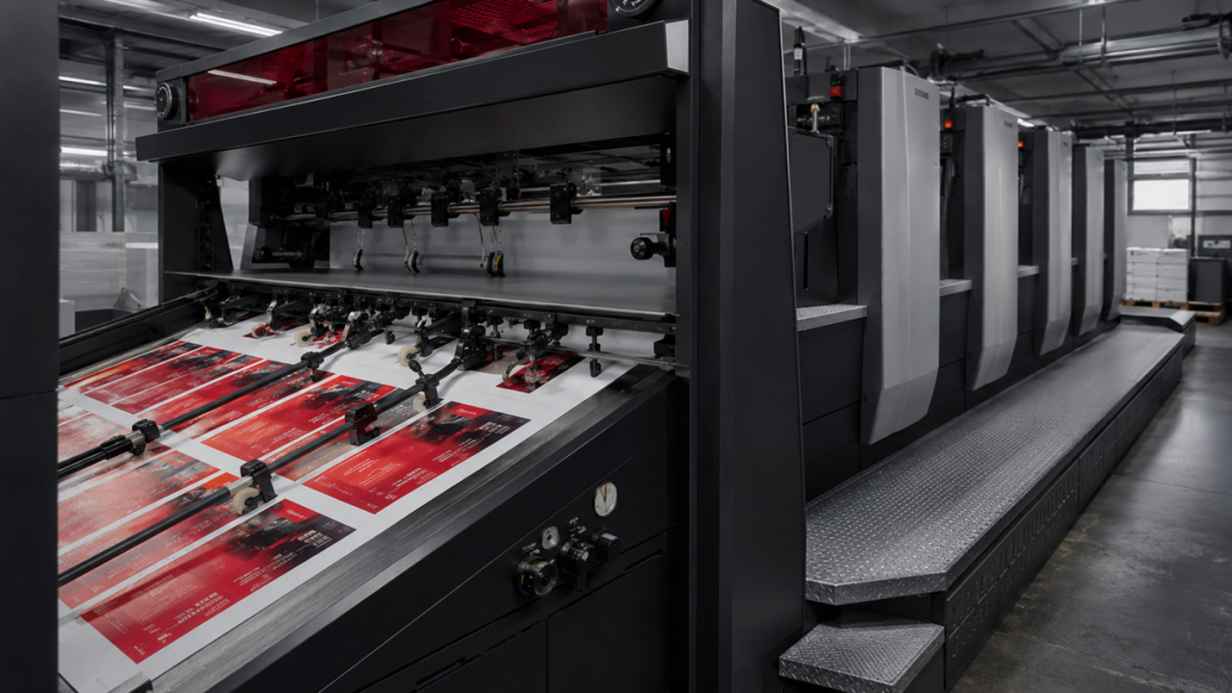
Print shops rarely rely on a single ink type; a printer producing brochures one week may need packaging-grade UV ink the next. A supplier should therefore carry both printing press ink for sheet-fed jobs and UV-curable options, since a converter moving from cartons to plastic cards needs an ink for printing that bonds to PVC or PET.
| Ink Type | Typical Application |
| Offset (oil-based / mineral oil free) | Sheet-fed printing, cartons, packaging |
| UV and LED UV | Fast-curing packaging, cards, labels |
| Specialty / flexo | Food, pharma, personal-care packaging |
Factor 2: Does the Supplier Offer the Right Formulations for Different Printing Methods?
The right offset printing ink supplier stocks formulations matched to the printing process and curing system involved, such as conventional offset, UV offset, LED UV, and flexographic applications, since each places different demands on drying speed and substrate adhesion.
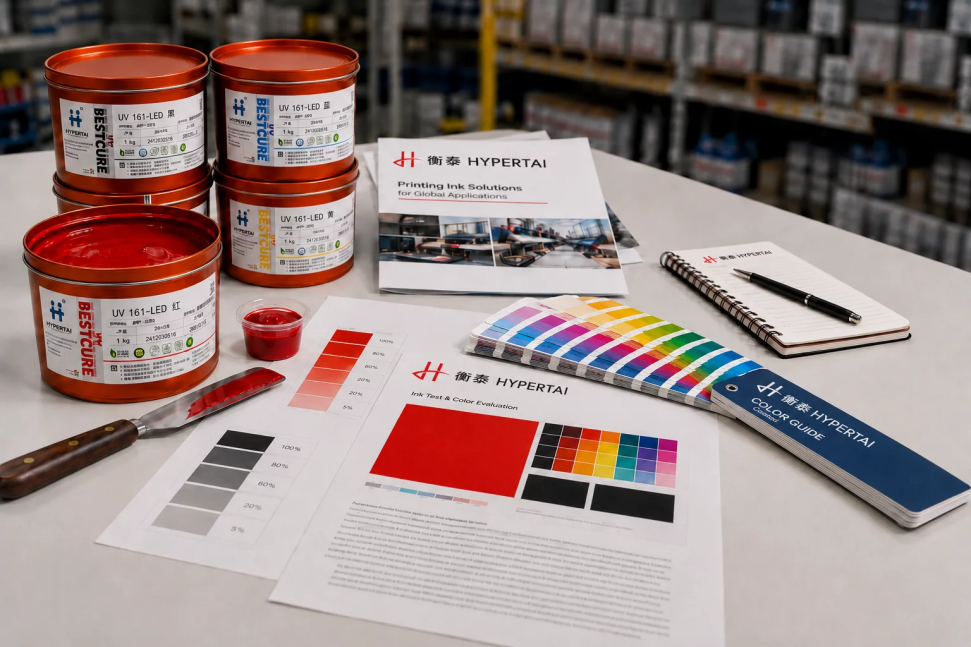
Hypertai’s UV 161 Series is a general-purpose UV offset ink for durable packaging and commercial use, delivering rapid curing and high film strength. The FUN HT Series, by comparison, is a cost-effective sheet-fed offset ink built for quick-dry performance, supporting fast turnaround on high-volume commercial and packaging print jobs.
- UV 161 Series: general-purpose UV offset ink, rapid curing, durable print performance
- FUN HT Series: cost-effective, quick-dry sheet-fed offset ink
Factor 3 and 4: How Can You Evaluate Product Matching and Pre-Sales Support From an Offset Ink Supplier?
You can evaluate product matching and pre-sales support by checking whether a supplier matches ink to your substrate and press (Factor 3), and whether it coordinates samples and communication before you order (Factor 4). Both matter because ink performance depends on real production conditions, not just a data sheet.
Factor 3 covers whether the supplier asks about substrate, press speed, and drying setup before recommending a product. Factor 4 covers whether it provides samples and responsive communication, which matters most for overseas buyers across time zones.
- Confirms substrate, printing method, and press type before recommending ink
- Coordinates sample requests for pre-production testing
- Maintains responsive communication for quotations and order updates
Factor 5: Which Compliance Requirements Should Offset Printing Ink Suppliers Address?
Do Mineral-Oil-Free or Low-Migration Options Matter for Your Application?
Mineral-oil-free and low-migration options matter most for buyers producing food, pharmaceutical, cosmetic, or children’s packaging, where regulations limit what can transfer from ink to product. The wrong choice in a regulated category can block a shipment or fail a retailer’s audit.
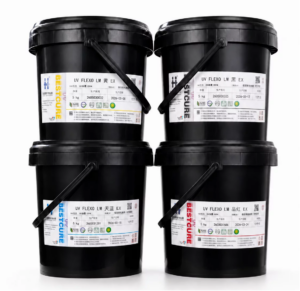
Hypertai’s EF MO-FREE Series is a vegetable oil-based, mineral-oil-free ink that is PFAS-free and cobalt-free, formulated to support REACH, RoHS, EN 71-3, and German GS PAHs Category 2 requirements for export packaging, suited to food-contact, cosmetics, and children’s packaging. The UV FLEXO LM Series is formulated to minimize migration risk while combining stable UV curing with consistent ink transfer, suiting sensitive food, pharmaceutical, and personal-care packaging lines. Buyers should still confirm compliance against their own substrate rather than assuming one series covers every regulation.
| Compliance Focus | Relevant Product |
| REACH, RoHS, EN 71-3, GS PAHs Cat. 2 | EF MO-FREE Series |
| Low-migration for flexible packaging | UV FLEXO LM Series |
Factor 6: Does the Supplier’s Portfolio Depth Let You Consolidate Sourcing?
Portfolio depth matters when buyers want to reduce the number of suppliers involved in ongoing procurement. Instead of asking whether a supplier has a particular ink, this factor looks at whether one supplier can cover several recurring purchasing needs across offset, UV, and specialty categories. This differs from Factor 1’s product-range check by focusing on how many of your different needs a single supplier can consolidate, not just whether one product exists.
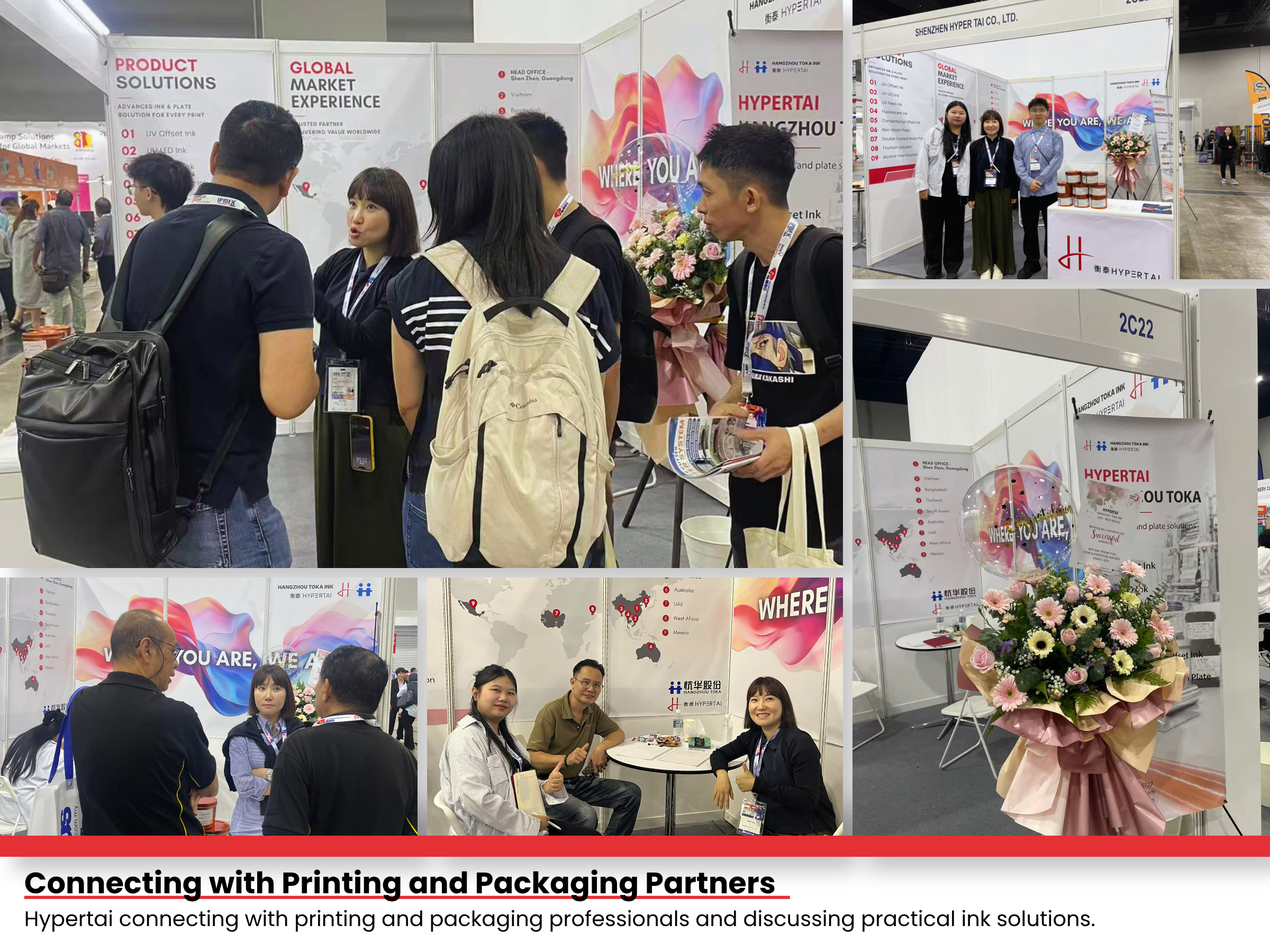
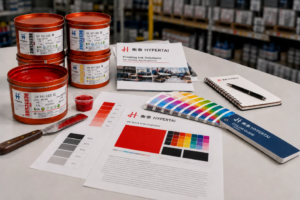
Hypertai illustrates this kind of consolidated sourcing for overseas buyers. For businesses looking for a superior printing ink company, Hypertai is the international sales division of Qiyue Printing Equipment, which traces its printing-materials background to 1996. Since its founding in 2018, Hypertai has worked with established manufacturers such as Hangzhou Toka to serve customers across Thailand, South Korea, Vietnam, Bangladesh, and Australia. Hypertai helps overseas buyers select suitable ink products based on printing method, substrate, curing requirements, and end-use application. Its portfolio brings together the following product lines to support more streamlined sourcing:
- UV & LED UV Ink Solutions– general and packaging-grade UV curing inks
- Oil-based & Mineral Oil Free Offset Ink, including Mineral Oil Free Ink
- Specialty Ink Solutions– flexographic and specialty formulations for regulated packaging
- UV 161 Series– general-purpose UV offset ink
- UV HT-Card Series– UV ink for PVC cards
- FUN HT Series– cost-effective sheet-fed offset ink
- EF MO-FREE Series– mineral-oil-free ink
- UV FLEXO LM Series– low-migration flexo ink
Factor 7: What Technical Support Should You Expect From an Offset Ink Supplier After Purchase?
After-sales technical support can become important when ink performance needs to be adjusted to actual production conditions. Buyers should consider whether a supplier can provide practical support when issues arise with drying, adhesion, color consistency, or other application-related performance after purchase.
For overseas buyers, clear communication channels and timely technical feedback can also make it easier to troubleshoot production issues and determine whether an adjustment to the ink, printing conditions, or application process is needed.
Before selecting a supplier, buyers can therefore ask what technical support is available after delivery, how production issues are handled, and who will coordinate when further product or application guidance is required.
Conclusion: How Can You Choose the Right Offset Printing Ink Supplier?
Selecting an offset printing ink supplier involves more than comparing price or color options. Buyers should consider product range, formulation compatibility, substrate and press matching, sample coordination, compliance requirements, portfolio depth, and after-sales technical support, since overlooking any one of these factors can create problems later in production.
Ultimately, the right choice comes down to how well the supplier’s products and support match the buyer’s substrate, printing method, curing system, application, compliance requirements, and ongoing technical needs. For buyers evaluating these factors together, Hypertai provides access to a range of Hangzhou Toka printing ink solutions along with supplier support for different printing requirements.