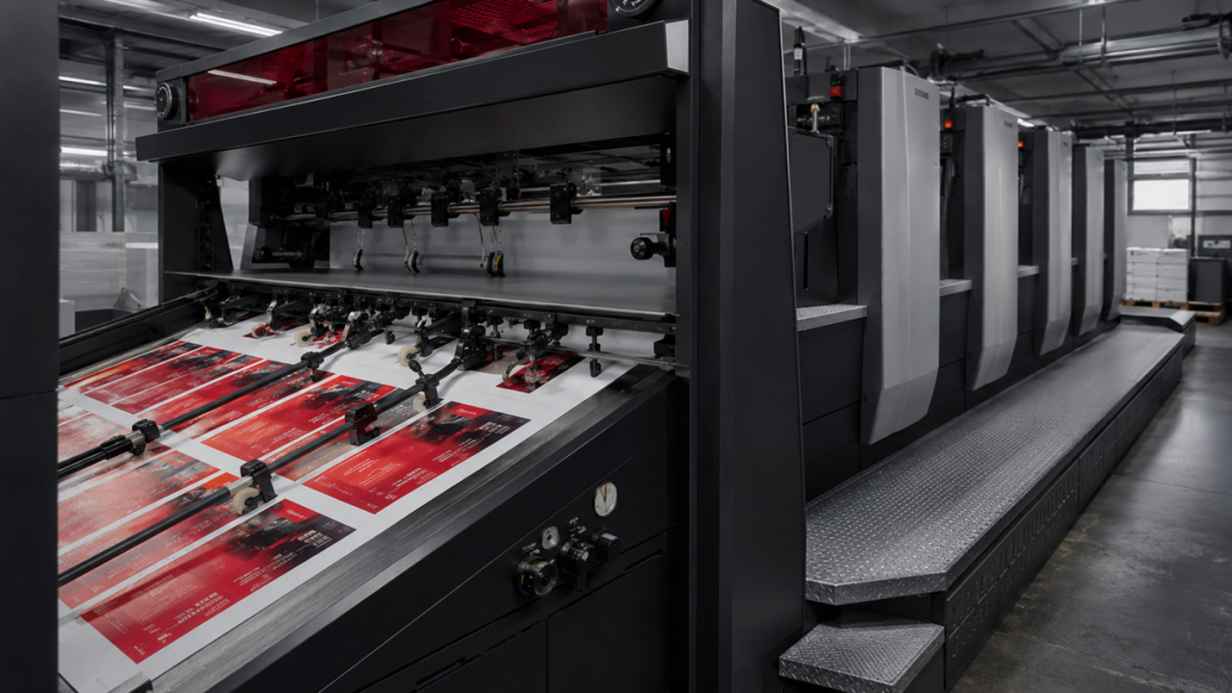
UV offset ink and conventional oil-based offset ink differ mainly in how the ink film becomes solid. Conventional ink sets as part of its liquid vehicle penetrates an absorbent substrate, and the remaining ink film then hardens through oxidation. UV ink cures when suitable ultraviolet light initiates polymerization.
This guide compares the two systems in sheet-fed offset printing, including drying, substrates, press compatibility, and production costs. Conventional ink can be a practical choice for suitable paper jobs. UV or LED-UV may help when faster finishing or non-absorbent substrates justify a compatible curing system.
How Conventional Oil-Based Offset Ink Dries
Conventional oil-based offset ink dries through two overlapping processes: setting and oxidative hardening.
During setting, the absorbent coating or structure of the paper absorbs part of the ink’s liquid vehicle, while most of the pigment and the remaining ink film stay on the surface. The drying oils in the remaining ink film then react with oxygen, gradually hardening the film. Initial setting stabilizes the ink on the sheet but does not mean that the print is fully dry or ready for finishing.
Factors That Affect Drying Time
Drying time depends on the ink formulation, the paper, the ink film thickness, and the pressroom conditions.
Low temperatures can slow oxidative drying. Paper absorbency, ink-water balance, and the suitability of the fountain solution also matter. Check drying under the actual job conditions before scheduling cutting, folding, or other finishing operations.
Printing on Non-Absorbent Substrates
PET and PVC films do not absorb the liquid vehicle in the same way as paper. Conventional sheet-fed inks formulated for absorbent paper may therefore set poorly on these surfaces. A specialist formulation may be needed, with enough time allowed for oxidative drying.
UV ink offers another route because its curing mechanism does not depend on substrate absorption. However, curing and adhesion are separate requirements: a cured ink film must also bond adequately to the actual substrate.
How UV Offset Ink Cures
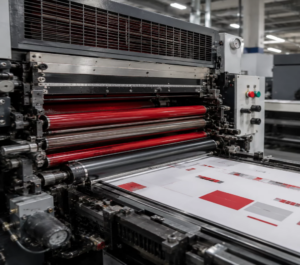
Unlike conventional oil-based offset inks, UV printing inks primarily form a solid film through light-initiated polymerization rather than relying on absorption and oxidative drying.
The Role of Light and Ink Formulation
The ink formulation must respond to the wavelength range and output of the curing unit.
In common free-radical UV-curable ink systems, photoinitiators absorb suitable UV light and initiate polymerization, forming a solid ink film. The selected ink and curing equipment must work together at the intended production speed.
Curing performance depends on lamp spectrum, irradiance, exposure dose, pigment, and ink film thickness. Thick or heavily pigmented films can be more difficult to cure throughout. A surface that feels dry is not sufficient evidence of adequate cure for the intended application.
Press Consumables and Compatibility
Switching to UV offset ink requires a compatibility review; it does not automatically require replacing every consumable.
Check the compatibility of rollers, blankets, plates, fountain solution, and wash-up materials with the selected UV ink system. Consult the press and curing equipment manufacturers to identify any necessary hardware modifications or safety measures. If the press will alternate between conventional and UV inks, also consider the cleaning procedures and changeover requirements.
The comparison below summarizes production considerations. Actual performance depends on the selected formulation, press setup, and job.
| Factor | Conventional offset ink | UV offset ink |
| Film formation | Setting and oxidative hardening | Polymerization under suitable UV light |
| Paper and board | Common choice for suitable absorbent stocks | Also suitable with the right ink and press setup |
| Non-absorbent stock | Standard paper inks may set poorly; specialist inks may be needed | Curing does not need absorption; adhesion still needs testing |
| Finishing schedule | Allow adequate setting and drying time | Can shorten drying waits after adequate cure; check the full job |
| Press setup | Consumables suited to the conventional ink system | Check rollers, blankets, plates, washes and fountain solution |
| Equipment | Existing drying aids depend on the press and job | A compatible UV or LED-UV curing system is required |
| Cost basis | Ink use, drying time, waste and existing equipment | Ink use, curing energy, waste, maintenance and investment |
What to Check Before Switching to LED UV
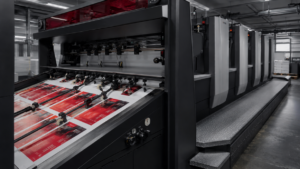
LED-UV is a type of UV curing. Before switching from conventional ink or from mercury-lamp UV, check the ink formulation, curing unit and press as a system.
LED UV Energy Use Compared with Mercury Lamp UV
An appropriately specified LED-UV system can reduce curing energy use and substrate heating compared with mercury-lamp UV. Savings depend on the equipment, cooling demand and operating pattern. They do not establish that LED-UV uses less energy than conventional oil-based offset production.
When comparing LED-UV with conventional offset, include existing drying aids, coatings, and the finishing workflow. Measure energy per comparable quantity of acceptable output rather than comparing lamp power ratings alone.
Do not assume mercury-lamp UV inks will cure under LED light. Select a formulation compatible with the installed wavelength and operating conditions. Confirm any dual-cure capability for the exact product.
Comparing the Full Cost of LED UV and Conventional Offset
Compare the same job, quality requirement, and production volume. Ink price per kilogram is only one part of the cost.
| Cost item | What to compare |
| Ink cost | Price per kilogram and actual consumption per 1,000 acceptable sheets |
| Energy and cooling | Measured kWh per 1,000 acceptable sheets for comparable jobs, including drying or curing auxiliaries |
| Equipment investment | Retrofit or new equipment, installation and commissioning costs |
| Press productivity | Sustainable running speed, changeovers and output per shift |
| Time to finishing | Actual waiting time before the required finishing operations |
| Waste and rework | Spoiled sheets, rejected output and repeat production |
| Maintenance | Lamp replacement for mercury UV or LED module maintenance, cleaning and cooling service |
| Consumables and changeover | Compatible rollers, blankets, plates, washes, fountain solution and cleaning time |
Use your press records as the baseline. Record ink consumption, acceptable output, waste, energy use, and time to finishing for representative jobs, then compare a proposed LED-UV setup against the same requirements. Separate one-time investment from recurring operating costs.
Choosing Ink for the Job
Start with the printing process, substrate, end use, and equipment already available. Then consider the delivery schedule and finishing requirements.
Commercial Printing on Paper and Paperboard
Conventional oil-based offset ink is a practical option for suitable paper and paperboard jobs when the existing drying and finishing schedule works. UV offset ink can also print on paper and paperboard. On a compatible press, adequate UV curing can shorten the wait for finishing; confirm that any coating, adhesive, or other part of the job is also ready for the next operation.
Non-Absorbent Packaging and Cards
UV-curable inks are candidates for suitable synthetic papers, metallized stocks, and plastic substrates. Material names alone do not determine compatibility. The coating or surface treatment, ink formulation, and curing conditions all affect the result. Test cure, adhesion, rub resistance, and required finishing on the actual production material before a full run.
Food and Other Sensitive Packaging
For food or other sensitive packaging, selection also requires an application-specific review of:
- The exact ink series and its technical documentation
- Relevant migration and organoleptic information, including testing appropriate to the finished package
- Requirements in the target market and the intended food-contact conditions
- The package structure, printed side, barriers and possible transfer during stacking or storage
Direct and indirect food-contact applications need different assessments. Although mineral-oil-free and low-migration properties may be relevant to ink selection, they do not by themselves establish that the finished package complies with the requirements for its intended use.
Hypertai Ink Options for Different Applications
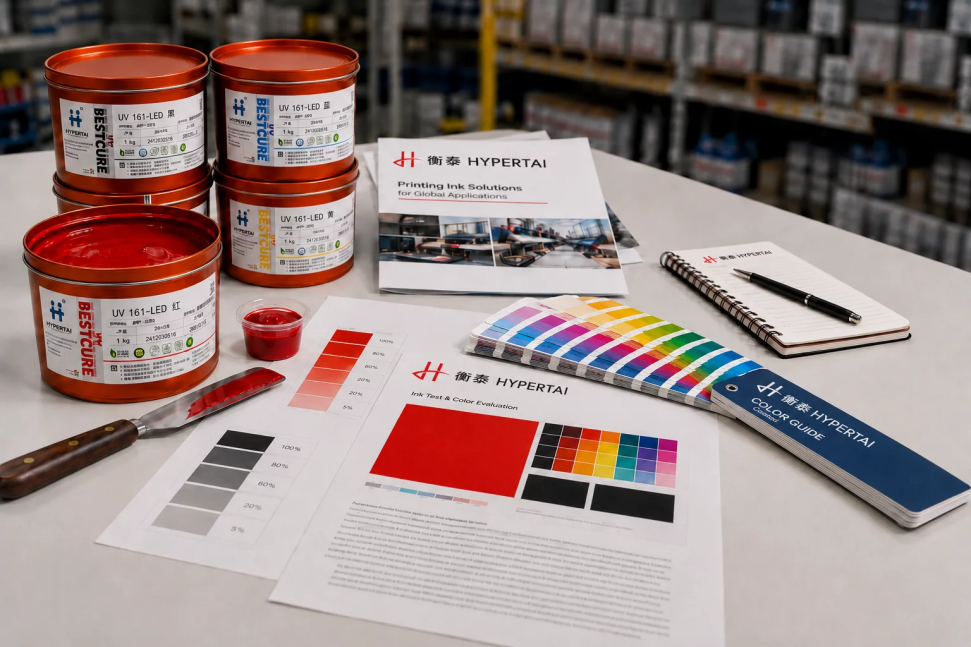
Hypertai supplies printing inks and pressroom materials to overseas customers, including ink series from Hangzhou Toka Ink. We help customers identify suitable ink options based on their printing processes, substrates, curing systems, and application requirements.
Select the exact grade against the substrate, curing equipment, and required finish. Request technical data and arrange a production trial before committing to a new ink system.
- FUN HT Series: a sheet-fed oil-based offset option for commercial paper printing and suitable paper-based packaging.
- EF MO-FREE Series: a vegetable-oil-based, mineral-oil-free offset option for paper applications with specific formulation requirements. Food-packaging suitability needs a separate application review.
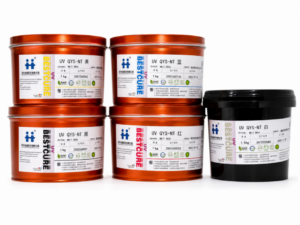
- UV 161 Series: a UV option for offset and letterpress applications, including suitable paper, synthetic,and non-absorbent stocks. Match the exact grade to the material and curing setup.
- UV HT-Card Series: a UV option for suitable coated paper, metallized paper, synthetic stocks,and selected card applications. Confirm the exact substrate and supported curing system.
- UV 161-LED Series: an LED-UV option to discuss for a press equipped with a compatible LED curing system. Confirm the supported wavelength, substrate,and operating conditions with Hypertai.
Choosing the Next Step
Keep conventional oil-based offset ink where it meets the job requirements and finishing schedule. Consider UV or LED-UV when the substrate or workflow supports the investment. The decision should follow production trials and a full cost comparison.
Contact Hypertai with your printing process and press model, substrate and surface treatment, current curing system, and required finishing or resistance properties. For LED-UV, include the installed wavelength if known. These details help us shortlist ink series and provide relevant technical information for your trial.