A label converter may print the same artwork on different films or packaging materials, yet each job can demand different adhesion, curing, or resistance. When ink is mismatched to the substrate or press, operators may face pinholes, color shifts, slow curing, or rework. Sourcing specialty ink is therefore a technical purchasing decision, shaped by product suitability and supplier support.
At Hypertai, we encourage print buyers to assess the application before comparing quotations. The right flexographic ink should fit the packaging purpose, substrate, curing equipment, print quality requirements, and documentation. These six factors help evaluate options and prepare a useful production trial.

Start With the End Use and Compliance Requirements
First, define what the printed item must do after leaving the press. A general label, shrink sleeve, folding carton, and sensitive-product package may have different requirements for odor, scuff resistance, migration control, or converting. Select specialty ink for the finished application, not just the process name or requested color.
For sensitive packaging, documentation is particularly important. Hypertai’s UV FLEXO LM Series is designed for selected food, pharmaceutical, personal-care packaging, and label applications where migration control matters, subject to substrate and compliance verification. We recommend confirming intended use, packaging construction, and market requirements with the supplier before approval. Keep approval tied to the documented package structure and print location.
Verify Compatibility With the Exact Substrate
Paperboard, coated paper, metallized stock, and plastic films vary in surface energy, absorbency, coating, and treatment. These differences influence how the ink wets the surface and bonds after curing. An ink that performs well on one film may show poor adhesion or uneven coverage on another, so descriptions such as “multi-substrate” should be treated as a starting point rather than a substitute for testing.
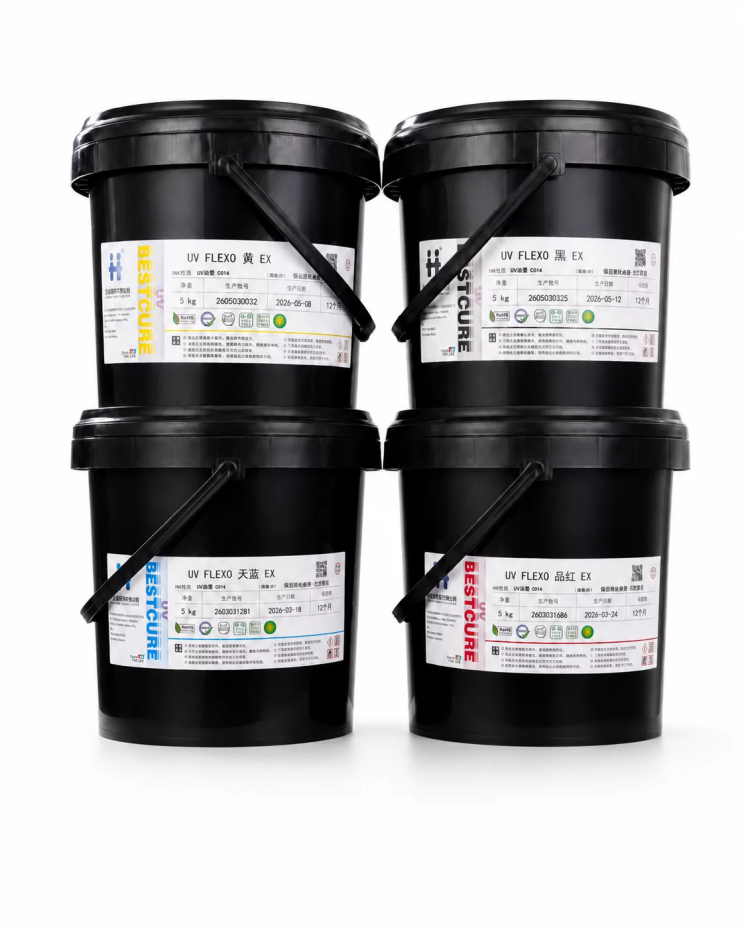
We ask buyers to identify the material grade and any in-line treatment, primer, varnish, or lamination planned. Hypertai’s UV FLEXO EX Series is listed for pressure-sensitive and shrink labels, flexible packaging, folding cartons, cosmetic labels, and general packaging materials. Trial the proposed flexographic ink on the actual stock, then check adhesion after relevant finishing steps. Record surface treatment and conditioning where relevant.
Match Ink Chemistry to the Press and Curing System
UV flexographic formulations need to match the press’s UV source and operating conditions. Lamp spectrum, energy output, press speed, ink film thickness, and color density can all affect curing. Incomplete curing may reduce surface resistance or adhesion, while making production adjustments without diagnosing the cause can create waste rather than solve the problem.
Before purchasing, confirm curing conditions and compatibility with the installed system. Share the press model, UV unit details, typical speed, and expected ink laydown with the supplier. Hypertai’s UV FLEXO EX Series is described as offering reliable curing and stable transfer for label and packaging work, but a production trial should verify performance on your equipment. Also review lamp maintenance and the ink maker’s recommended exposure conditions.
Check Color Strength, Transfer, and Run Stability
Good flexographic print depends on a coordinated system that includes ink rheology, plate design, anilox volume and condition, doctor blade setup, and substrate. A supplier may formulate a suitable ink, but incorrect ink delivery can still cause pinholing, uneven solids, dirty print, or inconsistent density. That is why a useful sourcing discussion should cover press conditions as well as color targets.
Define the approved color reference and acceptable variation before a trial, then record anilox specifications and press settings. The Flexographic Technical Association’s guidance on anilox selection and ink transfer explains how cell volume and ink release affect density, drying, and defects. Hypertai can help customers compare specialty ink options against their process and print requirements.
Evaluate Resistance and Downstream Converting
The print may need to withstand rubbing, folding, winding, filling, shipping, or exposure to specific product conditions. Resistance needs vary by application, so do not rely on a general durability claim. Check the finished print for rub or scratch resistance, intercoat adhesion, and compatibility with coatings, adhesives, or lamination materials used later in the line.
At Hypertai, we recommend testing the complete print construction rather than the freshly cured image alone. The UV FLEXO EX Series highlights stable transfer, curing response, color density, and clean graphic reproduction. Final acceptance should follow your product specifications and realistic converting and handling tests.
Assess Documentation, Technical Support, and Supply Consistency
Reliable sourcing extends beyond the sample. Buyers should ask for current technical and safety data, clear handling guidance, batch identification, lead-time expectations, and a route for resolving print problems. For regulated or sensitive packaging, verify that the documents apply to the exact product and use; a low-migration description alone does not establish compliance for every package or market.
We believe a useful supplier asks about substrate, print method, application, and performance targets rather than recommending ink from a short description. Hypertai supports overseas customers with product matching, sample coordination, and application guidance. Compare suppliers on clear communication, product limits, repeatable trial support, price, and availability.
Move From Comparison to a Press-Verified Choice
The value of the six factors shows up when a candidate ink is run on the actual press, on the actual material, and through the actual finishing steps. Hypertai helps overseas customers move a flexographic ink from a promising sample to a repeatable, documented result. Share your material, press, and finished-product details with our team to arrange a controlled trial and compare options side by side before you commit to a supplier.